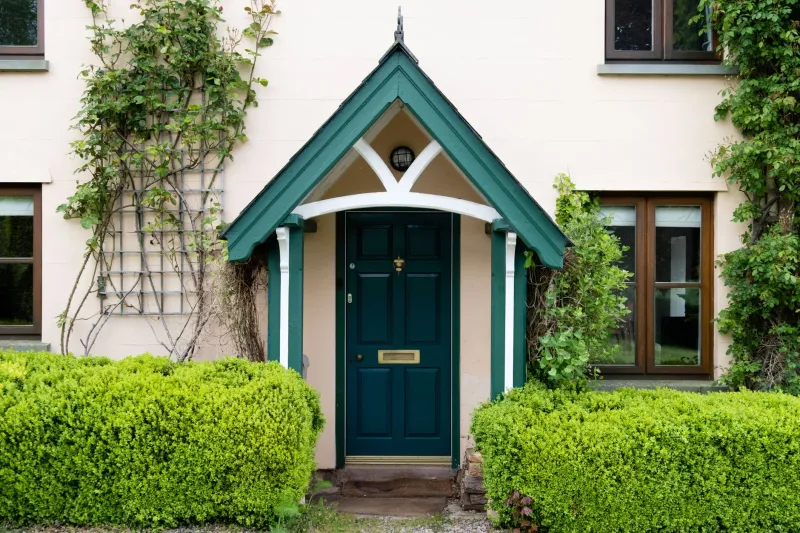
Someone Else Picked This Door: Judging an Inherited Composite Front Door Before You Wrench It Off

Photo: UK homeowner inspecting front door hinges close up, via c8.alamy.com
There's a particular flavour of suspicion that comes with a second-hand front door. You didn't choose it, you've never seen the receipt, and the previous owner has taken the warranty paperwork with them to wherever they've gone. So the temptation is to assume it's rubbish and budget for a new one before the kettle's even unpacked.
That's often the wrong call. Plenty of inherited composite doors are perfectly decent slabs from reputable UK manufacturers, sitting in a frame that needs twenty minutes of adjustment. Others really are past saving. The trick is telling the two apart without a fitter standing in your hallway charging you to find out.
Here's how to go about it.
First, work out what you're actually looking at
Composite doors are not a generic product. Underneath the skin they've got different locking systems, different glazing cassettes and different hinge gear, and knowing the maker is the difference between buying a £14 replacement handle and buying a whole new door.
Start with the door slab itself. Open the door and look along the top edge and the hinge edge — many manufacturers print or sticker a name, a serial number or a date of manufacture along that top rail. Get a torch on it. Then look at the glazing: the sealed unit should have a kitemark or a manufacturer's etch in the bottom corner, and the glass cassette frame inside the door often carries a brand too.
Hinges are a good clue. Flag hinges with a manufacturer's logo, a particular shaped cover cap, or three-way adjustable pins will usually point you towards a specific system. Same with the handle and the letterbox — branded hardware narrows things down. The lock cylinder should have a kitemark and often a three-star rating stamped on the face; that's worth photographing anyway, because it tells you whether the security is current or twenty years out of date.
The frame profile is the other giveaway. Look at the inside face of the frame for a maker's mark, and check the shape of the drainage slots and the threshold. And while you're there, note whether the door is a standard 44mm slab or something thinner and older — that single measurement tells you a lot.
Once you've got a name, a phone call or an email to the manufacturer with a photo usually gets you a spec sheet. Many will happily confirm the model, the date it was made and which installer ordered it.
Chasing a warranty that might not exist
Here's the bit people don't like hearing: composite door guarantees are almost always issued to the original purchaser, on the original installation address, and most are not transferable to a new owner. Some are; a fair few aren't.
So don't count on it. But do make the effort, because the payoff when it works is a free hinge set or a replacement glass unit.
Three places to look. First, your solicitor's paperwork — check the fixtures and fittings list and any replies to standard enquiries, because sellers sometimes note guarantees there. Second, the house file: the folder of boiler manuals and paint colours that may have been left in a kitchen drawer. Third, your own inbox — a surprising number of sellers will dig out a certificate if you ask nicely through the estate agent, especially within a few weeks of completion.
If you find nothing, ring the manufacturer anyway with the serial number. Even out of warranty, some will register you as the new owner of the door, which at least gets you access to spare parts and technical help.
Reading the fit, not the finish
A door can look smart from the pavement and still be a bad installation. Stand inside with the door shut and the lights on, and look for daylight at the corners. Run a hand around the edge — you shouldn't feel moving air anywhere.
Then walk the gap. The margin between door and frame should be roughly even all the way round: if it's finger-width at the top and pinched at the bottom, the slab has dropped on its hinges, which is adjustable. If the whole door sits crooked in a square frame, the frame was fitted out of level and that's a different, more expensive conversation.
Check the handle. Does it feel sloppy? Does it spring back properly? A dropping handle usually means the lock keeps have worn or the door has swollen slightly out of alignment. Check the hinges for rust spotting and for any packers — shims behind the hinge blade are a normal part of a good fit, but shims poking out of the frame near the threshold suggest someone was fighting a wonky opening.
Have a proper look at the seals. Gaskets should be soft and continuous, not flattened, split or glued back on with silicone. Look under the threshold for a drip bar and check the drainage slots aren't blocked with muck. And check the wall junction: a fat bead of mastic smeared around the outside frame is often hiding a gap that should have been foamed and taped.
Finally, the cosmetic stuff. Misted double glazing means a failed unit — replaceable, and not usually a whole-door job. Faded panels on a south-facing door are a different matter. And any cracking around the lock or handle on the outer skin is worth a professional look, because it can mean the door has taken a knock.
Repair, adjust, or start again
Here's the honest pecking order.
Adjust it if the problems are alignment, draughts, a stiff lock or a handle that's gone soft. Hinge adjustment and a new set of seals is a modest cost and turns a sulky door into a perfectly good one.
Repair it if you've got a failed glass unit, a broken handle, a worn cylinder or a split letterbox. Composite doors are modular, and most parts are gettable once you know the maker. Upgrading the cylinder to a three-star anti-snap, anti-bump, anti-pick unit is money well spent on any inherited door.
Replace it when the frame itself is failing, when the slab is delaminating across a panel, when it's a thin, older-style door with tired hardware and no realistic parts supply, or when the fit is so poor that correcting it costs more than starting fresh.
And there's one more reason to replace that has nothing to do with condition: sometimes a door is fine and you simply don't like it. That's allowed. Just be honest with yourself that you're buying kerb appeal, not fixing a fault — and don't let anyone sell you a security upgrade you don't need because the door happens to be a colour you'd not have chosen.
Either way, get one proper survey before you commit. Twenty minutes with someone who fits these doors daily will tell you more than an afternoon with a torch and a search engine.