The Bits You Touch Every Day: A Straight-Talking Guide to Front Door Hardware

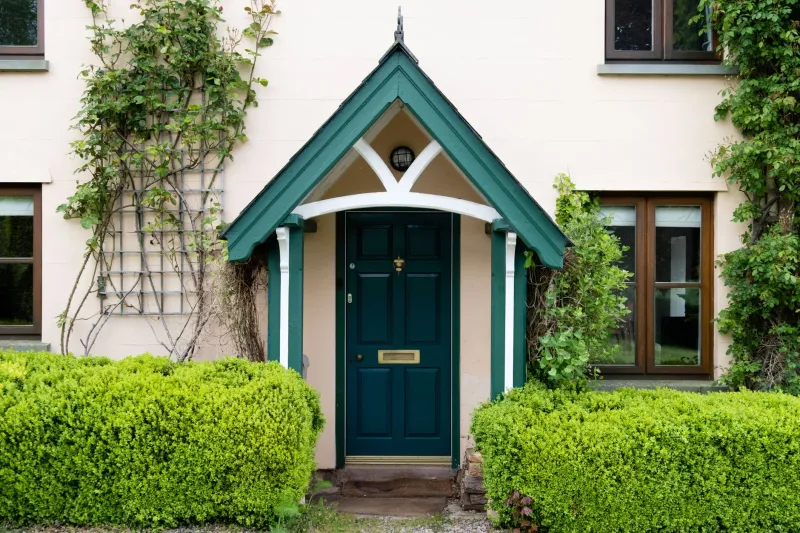
Photo: Shixart1985, CC BY 2.0, via Wikimedia Commons
The door gets the compliments. The hardware gets the wear.
A composite door is a big purchase, and most of us spend weeks agonising over the slab: the colour, the glazing, the panel design. Fair enough. But fast-forward five years and the thing you will notice every single day is the metalwork. The handle you grab with a muddy hand. The letterplate that takes the rain. The hinges that hold the whole thing square. If those parts look tired, the door looks tired, even if the slab underneath is still perfectly sound.
This is not a scare story about expensive hardware. It is a buying-guide reality check. You do not need the most exotic fittings on the market, but you do need to ask a few sensible questions before you sign. Here is what matters.
Finish first: what actually survives a British doorstep
Door hardware finishes are not all created equal, and the label on the showroom sample rarely tells the full story. The usual suspects are stainless steel, aluminium, brass, and various coated or plated finishes. Stainless steel is the safe, practical choice for most homes, especially near the coast. Aluminium is light and generally good at holding a powder-coated colour, but the quality of that coating matters enormously. Brass looks lovely and ages with character, though it needs to be a proper lacquered or living-finish product, not a thin plating that starts to flake.
Ask what the finish actually is, not just what it looks like. Is it powder-coated, anodised, PVD-coated, or plated? PVD finishes are worth knowing about because they tend to be harder-wearing than basic plating, but they still vary. A decent retailer should be able to tell you the finish type and the expected cleaning regime without disappearing to check with someone else.
Also, look at the edges and corners of the handle. That is where cheap coatings give up first. If the sample feels sharp, rough, or already has a faint discolouration around the rose, put it down.
Colour matching is a moving target
Matching your handle to your door colour sounds simple. In practice, metal and composite do not age in the same way. A black door and a black handle can start life looking like a set, then drift apart as one fades and the other stays put. Anthracite grey is another one to watch: there are many anthracites, and the hardware version may be warmer, cooler, or flatter than the door.
My advice is to see the actual hardware against the actual door sample, in daylight, before you order. Not a photo. Not a tiny swatch under showroom lighting. If the door is going to be south-facing, ask how the finish behaves in strong sun. Some colours soften over time; some coatings chalk. A good supplier will be honest about this rather than promising a perfect match forever.
If you cannot get an exact match, a deliberate contrast often ages better than a near-miss. Brushed steel on a dark door, or a matte black handle on a paler door, can look considered rather than mismatched.
Coast, sun and the exposure conversation
Two locations put hardware under more pressure than most: the coast and a fully exposed south-facing frontage. Coastal air carries salt, which is brilliant at finding weak spots in coatings and fixings. Strong sun does its own work, especially on coloured aluminium and plastic letterplate flaps.
If you live within a few miles of the sea, say so at the quoting stage. Ask whether the hardware is rated for coastal use and what the warranty says about salt exposure. Some warranties exclude coastal environments entirely, or require more frequent cleaning. That is not necessarily a deal-breaker, but you need to know before fitting day, not after the first winter.
The same goes for a door that catches the sun all afternoon. Dark colours and strong sunlight are a tough combination for any finish. A slightly lighter handle or a brushed finish can be more forgiving than a high-gloss dark coating.
The warranty small print nobody reads at the showroom
Hardware warranties are often shorter than the door warranty, and they usually come with conditions. Look for the bits about cleaning products, coastal locations, and what counts as normal wear. Many policies exclude scratches, dents, and finish fading unless it is a manufacturing fault. That is fair enough, but it means the way you look after the hardware actually matters.
Ask three direct questions: how long is the hardware covered, what is excluded, and who handles a claim? If the answer is vague, get it in writing. A ten-year door warranty means very little if the handle is covered for one year and the letterplate for none.
A five-minute maintenance habit that pays you back
You do not need a shelf of specialist products. A soft cloth, warm water, and a mild soap is enough for most finishes. Avoid bleach, abrasive creams, and anything with a heavy solvent base. Dry the metalwork after cleaning rather than leaving it wet, especially in winter.
Check the letterplate now and then. Grit and leaves collect behind the flap, and the brush strip can wear out. If the flap starts sticking or the seal looks flattened, replace the strip rather than forcing it. Hinges on composite doors are generally low-maintenance, but a quick visual check for loose screws or squeaks is worth doing. Do not drown them in oil; a small amount of the lubricant recommended by the manufacturer is plenty.
What to ask before you sign
Before you commit, get the hardware package confirmed in writing: handle make and finish, hinge type, letterplate style, and the warranty terms for each. Ask whether the finish is suitable for your exposure, and whether replacement parts will be available in a few years. A door is a long-term purchase, and the metalwork should not be the thing that makes it look old before its time.