Standing at Your Gate: What a Burglar Actually Reads on Your Front Door
You probably look at your front door twice a day: once on the way out with the recycling, once fumbling for keys in the dark. That's the trouble with living somewhere — you stop seeing it. Anyone walking up your path for the first time doesn't have that disadvantage.
Let's be clear about who we mean. Most residential burglaries in the UK are not the work of some criminal mastermind with a van and a plan. They're opportunists. They pick the door that looks like the least trouble and, crucially, the least likely to be noticed. So the useful question isn't "is my door burglar-proof?" — no door is — but "does my door look like more hassle than the one next door?"
Here's what the walk up your path actually reveals.
The approach says as much as the door
Before anyone lays a finger on the handle, the path has done some talking. A side gate swinging open, a dark recess beside the porch, a hedge grown over the door so you can't be seen from the street — those are gifts. The ideal for an intruder is cover, quiet and a door that isn't overlooked by anybody.
So the cheapest security improvement on most properties isn't hardware at all. It's a tidy boundary, a gate that latches, a bit of pruning and a door that's visible from the road. Natural surveillance does more work than most people give it credit for.
Multipoint locking is the baseline, not the headline
Almost every composite door sold in Britain now has multipoint locking — hooks, rollers and usually a deadbolt engaging at several points down the frame. Retailers shout about it because it sounds impressive, but it's standard kit. If it's being presented as a headline feature, that tells you something about the rest of the pitch.
What's worth asking instead: how many points actually engage, and are there hinge bolts? Composite doors often hang on externally visible hinges, and hinge bolts (sometimes called dog bolts) pin the slab to the frame when the door is shut. A door with three hooks and no hinge bolts is a weaker proposition than one with five hooks and a set of bolts. The count isn't the story — the engagement is.
The cylinder is where the real information is
The lock cylinder — the bit the key goes into — is the component attacked most often on a modern front door. Lock snapping, bumping and drilling all target it, and a poor cylinder can undo a perfectly decent door in under a minute.
Look for a TS007 3-star marking or a Sold Secure Diamond rating on the cylinder itself, and check the handle carries a matching 1-star rating if it's a separate item. Anti-snap, anti-bump, anti-drill and anti-pick should all be on the spec sheet. Just as important: the cylinder shouldn't sit proud of the door face. A snap-secure cylinder is designed to sacrifice a section if attacked, but excess protrusion gives an attacker more to grab in the first place. A cylinder guard or security escutcheon closes that gap.
Letterbox, glass and the things nobody mentions
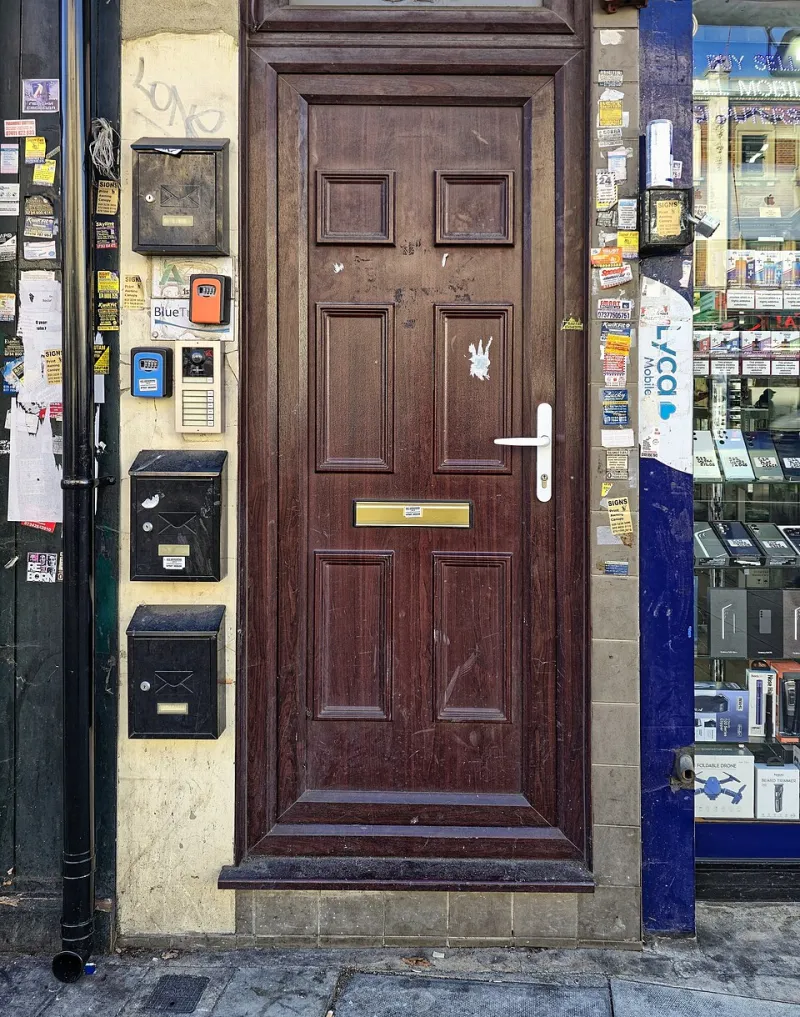
A letterbox is a hole in your door. That's the whole point of it, and it's also why it deserves a second look. A wide, unrestricted flap low down the door is a fishing opportunity — keys on a hall table, a handbag on a hook, a car key in a bowl. A letterbox with an internal cage or restrictor, plus the simple habit of keeping keys out of sight of the glass, sorts that cheaply.
Then there's glazing. Toughened glass shatters into small cubes, which is excellent for safety and less good for security. Laminated glass holds together when it breaks. If your door has decorative panels, a glazed centre or sidelights beside it, laminated units are worth specifying. Also ask whether the glazing beads are internal — if you can prise the bead off from outside, so can someone else.
Lighting: the cheapest deterrent going
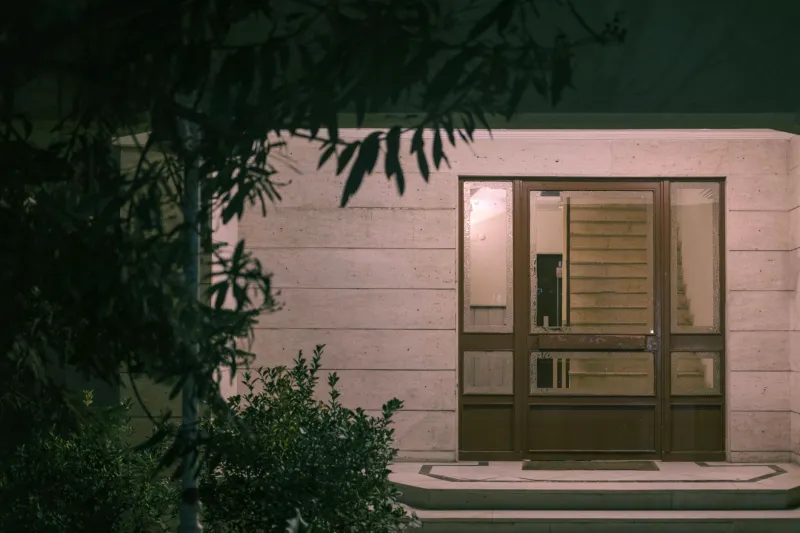
A door in a pool of light is a door nobody wants to be seen standing at. A dusk-to-dawn lamp or a PIR flood above the porch costs very little and does more than most gadgets. Combine it with a clear house number so that anyone — a delivery driver, a neighbour, the police — can identify the property quickly.
Sales gimmicks versus genuine weak points
Genuine, worth paying for: a 3-star anti-snap cylinder, a multipoint lock with properly engaging hooks, hinge bolts, laminated glazing where there's glass, internal beading, and a PAS 24 certificate on the door set. PAS 24 isn't a magic badge — it's a baseline standard — but it's a sensible floor to insist on.
Less convincing: ever-higher point counts presented as a number to compare, "anti-vandal" handles on a domestic door, "police approved" claims without a certificate or scheme name, and any security product sold at the doorstep on the day. If a smart lock appeals, fine — but check it carries the same cylinder ratings as the mechanical option it replaces.
A ten-minute doorstep audit
- Stand at the gate in the dark. Can you see the door? Can someone at the door be seen?
- Check the cylinder for a 3-star or Diamond mark, and whether it protrudes.
- Shut the door and try to rock it — any movement at the top or bottom corner?
- Confirm hinge bolts are fitted and the hinges are pinned.
- Look at the letterbox from inside. Can you see keys or a bag through it?
- Check whether glazing beads are external, and whether glass is laminated.
- Test the lock with the door open — does everything throw smoothly?
- Clear the porch of anything that could be stood on or hidden behind.
- Fit or fix a porch light and a visible number.
- Keep keys, spare keys and car fobs out of line of sight of any glass.
None of this turns your house into a fortress, and it doesn't need to. A composite door that's well fitted, properly lit, correctly locked and clearly cared for reads as one thing to an opportunist: someone's at home, and it isn't worth finding out.