The Porch Illusion: What an Overhang Actually Does for Your Composite Door
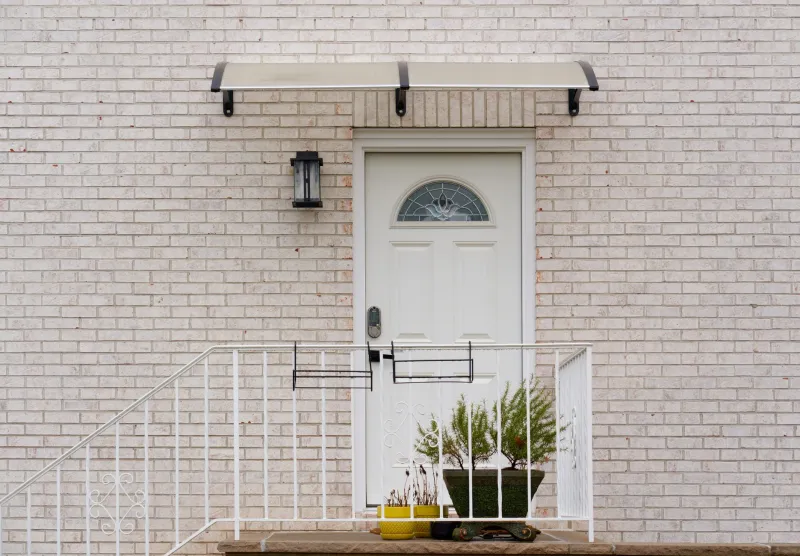
There's a certain comfort in a porch. Estate agents love them, neighbours compliment them, and on a wet Tuesday in November they give you somewhere to wrestle with a carrier bag while hunting for keys. But somewhere along the line, "nice bit of shelter" quietly turned into "my door will now last twice as long" — and that second claim deserves a proper look.
So let's look at it. No sales spin, no doom-mongering, just what an overhang does and doesn't do for a composite front door in a British climate.
The short answer, before the detail
An overhang helps. It is not a force field.
A decent canopy or recessed opening cuts the volume of rain hitting the face of the door, keeps the worst of the low winter sun off the finish, and reduces how often you're standing in a downpour fumbling. What it cannot do is stop wind-driven rain angling in from the side, or dry out a threshold that's sitting in standing water. It also won't rescue a door that was never sealed properly in the first place.
Think of a porch as a comfort and wear-reduction feature rather than a performance upgrade. That's the honest hierarchy.
Rain doesn't fall, it arrives sideways
This is the bit people forget. UK rain is rarely vertical. A good old-fashioned Atlantic front will drive in at a shallow angle, and the direction changes with the wind — south-westerlies hammering one day, a biting easterly the next.
A canopy 300mm deep will shade a strip of wall roughly its own depth when the rain is close to vertical. In a proper gale, that same canopy is sheltering almost nothing, because the rain is coming in almost horizontally, often from an angle the canopy never anticipated. If your door faces the prevailing weather and there's nothing between it and the coast or open fields, a modest canopy is a gesture, not a solution.
Where canopies earn their keep is in the everyday stuff: drizzle, light showers, the school-run dash. That's a real benefit — just not the same thing as weatherproofing.
The free porch you might already own
Here's the good news. Plenty of UK homes already have a form of porch protection without a canopy in sight — a recessed opening. Victorian and Edwardian terraces often set the front door back 100–200mm inside a brick reveal, and that depth shelters the frame edge, the hinge side and the lock area surprisingly well.
If your door sits in a deep reveal, a bolted-on canopy adds less than you'd think. If your door is flush with the front elevation, sitting proud with nothing above it, that's when an overhang starts earning its money. Worth checking before you spend.
Water gets in at the edges, not the middle
The panel itself is rarely the problem. Composite slabs are laminated, sealed and generally robust. Doors let water in at the perimeter — and a canopy doesn't change much there.
- The threshold. Splashback from a path or a step is the classic culprit. Rain lands, bounces, and creeps into the bottom rail and the frame corners.
- The bottom corners of the frame. Where the drainage path gets blocked by sealant, grit or a badly trimmed sill.
- The lock and letterbox furniture. Water pooling in a handle recess or behind a flap.
- The hinge side in exposed positions. Wind pushes water sideways along the frame, past the compression seal.
None of that is fixed by a roof over the door. What fixes it is proper drainage, correct falls away from the property, an unblocked threshold channel and seals that actually compress.
Sun is the slow vandal, not rain
Here's the one that surprises people. On a south or west-facing elevation, ultraviolet light and heat do more long-term cosmetic damage than rainwater ever will. Darker colours absorb more heat, which is precisely why a black or deep grey door on a sun-trap elevation can look tired years before an identical door under a canopy on a north-facing wall.
A porch genuinely helps here — shading the face of the door for part of the day is real protection. But check what your colour-fastness guarantee actually says. Some are conditional on elevation, some exclude unshaded south-facing installs, and some are shorter than the door's structural warranty. Ask before you order, not after.
Hardware ages first
Handles, letterbox flaps, hinges and the cylinder take a beating regardless of overhead cover. What an overhang does is reduce how often they sit wet. Over years, that's the difference between a finish that still looks sharp and one that's pitted and chalky.
Worth noting: the shelter a porch provides is only as good as the airflow. An enclosed porch with no ventilation can trap damp air and leave hardware wetter for longer than an exposed door in open air. That's a genuine trap, and it's more common than you'd expect in older glazed porches.
Questions worth asking your surveyor
Before you assume the overhang has everything handled, put these to whoever measures up:
- Which way does this elevation face, and how exposed is it really?
- Is the door set back into a reveal, and by how much?
- Where does rainwater go once it hits the threshold — is there a drainage path, and is it clear?
- Will the new door sit flush with the existing sill, or will it need one?
- Does the canopy depth actually cover the door face at a realistic rain angle, or is it decorative?
- Are there any guarantees that change because of the elevation or the exposure?
- If the porch is enclosed, what's the ventilation like?
Those seven answers tell you more about real-world performance than a brochure ever will.
So — worth it or not?
Build the porch if you want one. Shelter on a wet morning, a dry spot for the dog towel, a bit of kerb appeal and a genuine reduction in sun exposure are all decent reasons.
But don't buy a canopy to compensate for a door that's badly fitted, and don't assume an overhang makes the exposure question disappear. The seal, the threshold, the drainage and the fitting do the heavy lifting. The roof over the top is a very pleasant bonus.
Get the door right first. Then enjoy standing under the porch, dry, smug, and slightly judgemental about next door's letterbox.