Reading Your Street: How to Choose a Front Door Colour That Belongs Without Blending In
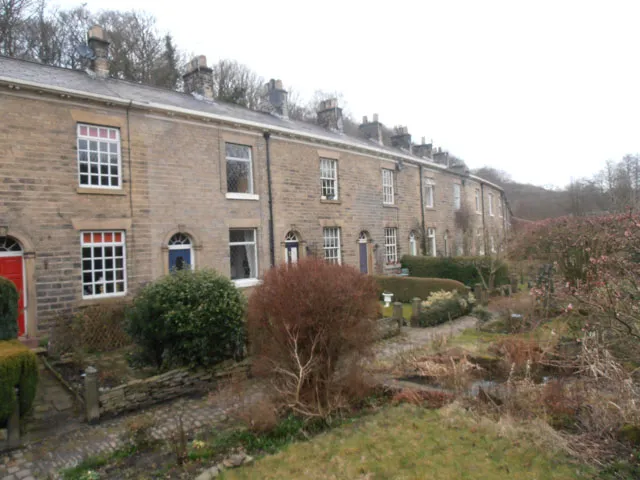
Photo: Row17 , CC BY-SA 2.0, via Wikimedia Commons
Walk down any UK street and you'll see the same conversation playing out in colour. One house goes navy. Two doors down goes navy. Then someone panics and paints theirs red. Choosing a front door colour isn't about finding the single best shade. It's about reading what's already there and making a decision that looks deliberate from the pavement and still works when you're selling in ten years.
Look at the house before the door
Start with the materials you can't change. Red brick has warm undertones and can handle deep greens, navy, black, burgundy and cream. Yellow London stock brick is softer and looks good with sage, olive, off-white and dark grey. Rendered or painted houses are more forgiving — white render can take almost anything, but grey render can make a bright door look plastic if the undertones fight. Roof tiles matter too. A slate roof and a red clay roof want different things from a door.
Period or modern?
Victorian and Edwardian terraces usually suit panel doors, glazed tops, brass or black hardware and colours that look like they've been there a while: deep blue, forest green, burgundy, black. A modern new-build can carry a flush slab, long bar handle and anthracite or a strong accent colour. The mistake is putting a very modern door on a period house and expecting the house to adapt. It won't.
The two-door test
Stand on the opposite pavement and look at your house and the one next to it. If your neighbour has a red door, a second red door next door can look like a matched pair — which is fine if you like that, but it's rarely the goal. Try a tone that contrasts rather than copies: if next door is bright red, a deep green or navy will look intentional. If the street is a sea of grey, a warm cream or muted blue can lift the whole row without shouting.
Add personality in the details
If you want colour but the street is conservative, put personality in the hardware and glass. A black door with brass furniture, a house number in a different finish, or a glazed panel with a subtle pattern can do more than a loud colour. If you want a bold door, keep the surrounding details quiet. One strong move is enough.
Weather and maintenance
The UK weather is not neutral. Dark colours show dust and road salt. South-facing doors fade faster. Coastal streets punish cheap finishes. North-facing walls grow algae. A composite door should hold its colour, but the finish still matters. Ask how the colour is applied and what the warranty covers. And order a sample — look at it against the brick at midday and again in the rain.
Resale appeal
If you're planning to move in the next few years, classic colours are safer: black, navy, deep green, burgundy, cream, anthracite. Very bright or very trendy colours can date. That doesn't mean you can't have fun. It means the door should look like it belongs to the house, not like it arrived from a different decade.
Make a shortlist, then stand back
Pick three colours and three styles. Photograph your house from across the road. Tape colour swatches to the door and live with them for a week. The right door won't just match the brick. It will make the whole street look like someone thought about it. A front door is the one bit of the house you can change without touching the structure. Use that power to read the street, not just the catalogue.